How to Play Solitaire Card Games
Solitaire is a family of single-player card games that share a few ideas: you move cards between piles by rule, and you win by sorting or clearing all of them. Learn those ideas once and most variants stop looking strange.
5 min read
On this page
This guide covers the parts of a layout, the order in which to make moves, and how to pick a first game from the solitaire and card titles on the site.
The parts of a solitaire layout
Most solitaire games use the same vocabulary. The tableau is the main area of columns where you do most of the work. The stock is the face-down pile you draw from when you run out of moves. The waste is where drawn cards land. Foundations are the piles where cards end up, usually built by suit from ace upward.
Not every variant has all four. Some skip foundations, and some replace the stock with a grid. Check which parts a game uses before you make your first move, because the goal follows from the layout.
How building columns works
In the classic setup, you build tableau columns in descending order and alternate colors: a red 7 goes on a black 8, for example. Only face-up cards can move, and you can usually move a run of correctly ordered cards as one unit.
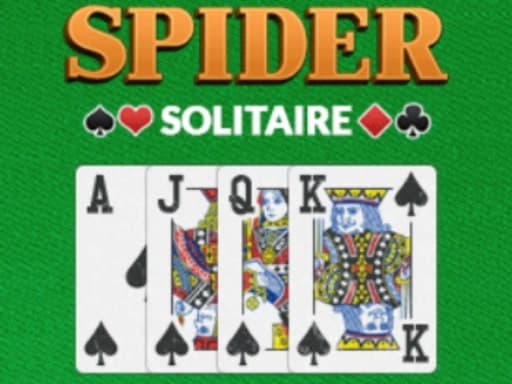
Other variants change the rule. Spider Solitaire Pro uses two decks, and its controls tell you to stack cards in the tableau in descending order and click the stock button for more cards. Read the rule line for each game, since one changed condition alters your whole approach.
Drawing from the stock
The stock is a resource, not a default move. Every draw brings new cards into play but also buries information, and in some variants a stock deal covers every column at once. Before you draw, check each tableau column and the waste for any move you missed.
A good habit is to scan in the same order every time: foundations first, then tableau runs, then the waste card, then the stock.
- Look for any move that turns a face-down card face up.
- Check whether the waste card fits anywhere before drawing again.
- Draw only when no useful move is left.
Planning moves before you make them
Solitaire rewards patience more than speed. Prefer moves that reveal hidden cards, because every face-down card is unknown information. Columns with the fewest hidden cards are often the best ones to work on first.
Empty columns are valuable space. Do not fill one just because you can; wait until you have a king or a run you actually want there. Also avoid sending cards to foundations too early if you may need them as stepping stones in the tableau.
Variants that change the rules
Solitaire 15in1 Collection bundles many variants and names Freecell and Klondike among them. That makes it a practical way to compare layouts in one place. Its common goal is to eliminate all the cards on the table, though each variant gets there differently.
Fairway Solitaire - Classic Cards Game is a golf solitaire where you try to win rounds by removing all the cards from the grid, played with the mouse. There is no column building here, so treat it as a clearing puzzle and look ahead for chains.
Mahjong Quest is described as a solitaire puzzle where you remove matching pieces from the board until it is clear. It uses tiles instead of cards, but the planning habit is the same: check which pieces are blocked before you commit.
Card puzzles that bend the genre
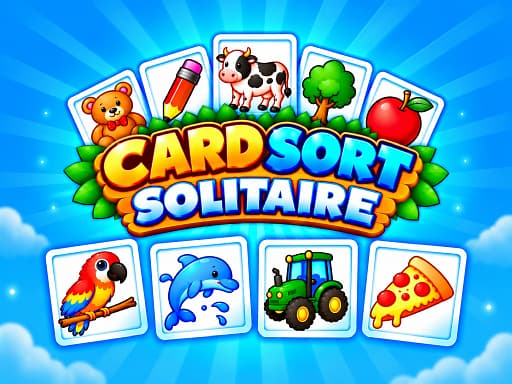
Card Sort Solitaire asks you to match picture and word cards to their correct categories and clear all sets, using a mouse or touchpad. It is closer to a sorting puzzle than classic solitaire, so it suits you if you like the calm pace but want a different kind of thinking.
Caribbean Stud Poker is a casino card game against the house, with bets and a dealer hand to beat. It is not solitaire, but it sits with the card games on the site if you want to compare a hand-ranking game with a pile-sorting one.
Choosing a first game
Judge a game in the first minute. Can you tell what counts as a legal move? Does the layout show the goal? If you are unsure, read the controls line and play one slow round.
For a broad start, try Solitaire 15in1 Collection. For a shorter clearing puzzle, try Fairway Solitaire. For a harder two-deck challenge that demands concentration, try Spider Solitaire Pro.
Frequently asked questions
What is the goal of classic solitaire?
You usually build all the cards onto foundation piles, sorted by suit from ace upward. Some variants instead ask you to clear every card or tile from the board.
Is every solitaire game winnable?
No. Some deals are impossible, and results depend on the variant and on your choices. Careful planning improves your odds but cannot fix every deal.
What is the difference between Klondike and Freecell?
Solitaire 15in1 Collection names both as variants. Beyond that, check each game's rules line, because layouts and move rules differ between them.
Which game is a good starting point for a beginner?
Fairway Solitaire - Classic Cards Game is described as simple and uses only the mouse, so it is an easy way in. Solitaire 15in1 Collection lets you try several variants.
Is Mahjong Quest really a solitaire game?
Its description calls it a solitaire puzzle: you remove matching tile pairs until the board is clear. It uses tiles rather than cards.